Competence in Rope Access

Competence in Rope Access
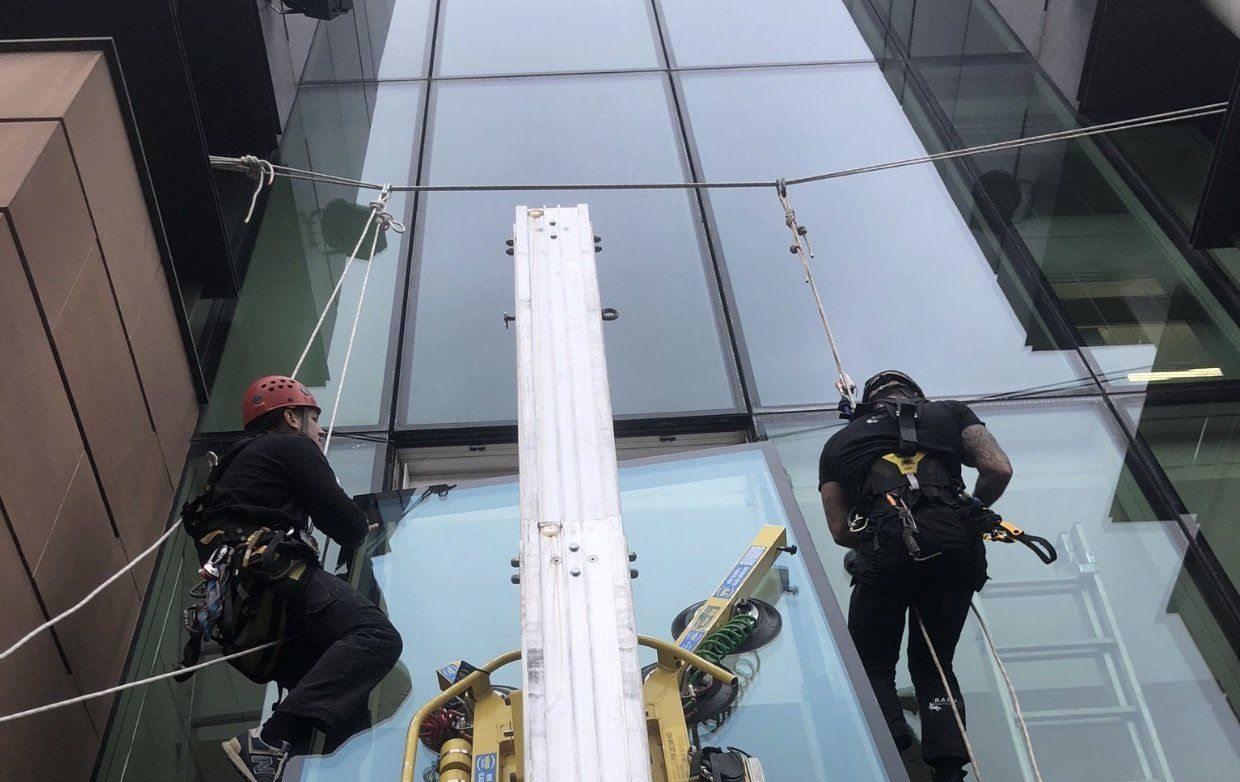
Competence (noun) the ability to do something successfully or efficiently.


Following on from the last article of "Rope Protection and the Failings" I would like to look at Competence within Rope Access.


Every employer shall ensure that no person engages in any activity, including organisation,planning and supervision, in relation to work at height or work equipment for use in such work unless he is competent to do so or, if being trained, is being supervised by a competent person. (The Work at Height Regulations 2005). 


So with that being said, when there is bad/unsafe practice, poor incompetent supervision the law is being broken. The Working at Height Regulations 2005 come under the umbrella of the Health and Safety at Work Act 1974.

Judith Hackitt, HSE’s Chair said:


‘The essence of competence is relevance to the workplace. What matters is that there is a proper focus on both the risks that occur most often and those with serious consequences.


Competence is the ability for every director, manager and worker to recognise the risks in operational activities and then apply the right measures to control and manage those risks.


I would hazard a guess that if you are reading this and are involved in rope access as a technician you are more than likely to have an IRATA certificate. That is not to say that is the only ticket in the UK. BS7985/ISO22846 are also covered in this article.


For those people who have limited or no knowledge of the IRATA Rope Access Certification scheme here's a very quick overview. IRATA training programmes comprise of at least 30 hours training over a minimum of 4 days. At the end of which will be an assessment conducted by an independent assessor (IRATA assessments shall only be carried out by IRATA Assessors who are independent of the candidate, the candidate’s employer and the organisation providing training). There are three levels of certification Level 1 being the beginner if you like, Level 2 intermediate and Level 3 advanced.


Both IRATA and ISO22846 state in regards to competence as the following: Rope access work can only be carried out in a reliably safe manner where people are competent. To be considered competent, a rope access technician needs to have sufficient professional or technical training, knowledge, actual experience and authority to enable them to:

1. carry out their assigned duties at the level of responsibility allocated to them;

2. understand potential hazards related to the work under consideration and be able to carry out appropriate workmate rescue procedures;

3. detect technical defects or omissions in their work and equipment, recognize implications for health and safety caused by such defects or omissions, and be able to specify a remedial action to mitigate those implications.


And both also state: Rope access technicians should have adequate skill and experience to:

1. understand the limitations of their level of training with regard to work practices;

2. understand the various uses of the equipment they use and its limitations;

3. select equipment correctly;

4. use the equipment properly;

5. inspect their equipment;

6. maintain and store the equipment they use.


So we clearly have the guidance to work Safely & Competently. We have been trained and deemed competent by independent assessors. So why are there still failings?


I think we have to look at failure, there are two types of human failure

  1. Human error is an unintentional action or decision.
  2. Violations are intentional failures – deliberately doing the wrong thing


If we look at Human error, It can happen to even the most experienced and well-trained person. But violations on the other hand are intentional failures – ‘deliberately doing the wrong thing’. The violation of health and safety rules or procedures is one of the biggest causes of accidents and injuries at work.


Typical causes of violations include:

  • workers thinking rules don’t apply to them;
  • being under time pressure;
  • not having enough workers to do the work;
  • not having the right equipment;
  • a lack of understanding (Competence)
  • perceptions that rules are too strict or unnecessary – ie the perceived benefits outweigh the perceived penalties;
  • wanting to take the easy option;
  • perception that they won’t get caught; 
  • peer pressure.


I was recently looking at a tender document and was astounded to see that the weighting would be towards how cheap they could get it compared to the actual quality. In this instance I decided not to go any further with the tender. Does this explain why the same poor standards are seen on work sites again and again, when cost comes over quality? The saying "If you think it's expensive to hire a professional to do the job, wait until you hire an amateur" springs to mind.


I, like most use social media as an advertising platform. I don't post for likes or to get more followers (of course it is fantastic when you get appreciated by others in your field, who doesn't welcome that!), I post because what we do is safe, competent and professional and I like to share that fact. Whilst using social media I see a lot of unsafe acts, which if we look at that statement again from the Working at Height Regulations 2005 is a disregard for the law. I often say "Would they rig like that on their assessment?".


We have all done things in the past where when we look back we think "Yeah that was a bit sketchy" But I feel it's how we learn from our past mistakes and strive to be better is what counts. To have presence of mind and be open to criticism and advice from others. I have found that having mentors who uphold the principals, morals and ethics of a safe work culture invaluable both in the development of my company but also individually as a technician.


Competence regards us all, whether Level 1, 2 or 3, Rope Access Manager or Company owner. Are you competent in management skills or competent in supervisory skills, I think you have to be honest with yourself and if you have failings, address them.


To work as a Rope Access technician is a fantastic and rewarding job, but take pride in what you do. Treat everyday as assessment day. Take your time, prepare it right. Think of the Five P's! Planning Prevents Piss Poor Performance!


Remember a competent person is not someone who simply has the competence to carry out a particular task, It is someone who has the necessary skills, experience and knowledge to manage health and safety.

by PH449742 29 April 2025
Unquestionable Anchors, Questionable ?
by PH449742 2 January 2023
IRATA training cost: Race to the bot tom
by PH449742 2 January 2023
Recommendation: Act upon or Ignore?
by James Hollingsworth 18 December 2020
To listen click the logo above or here. I had the opportunity to chat with Mikey Stevens from the Rope Access & Climbing Podcast on the subject of Rope Protection. Thank you to Mikey and his team for this opportunity. Notes from show: Hello and welcome back to The Rope Access and Climbing Podcast. Today I'm chatting with James Hollingsworth about a post he made on Linked In around the same time I posted about rope protection on Acceptable or NOT acceptable. (Nov 1/2020) In this hour-long episode, we will be diving into the facts about the subject and what IRATA and SPRAT state, how we got to this point, standards, and even cover several soft and hard rope protectors. There is no, one rope protector that does it all. But there are some that are better than others. Please note this is a ROPE ACCESS Only subject we are not talking about other industries like fire or arborist work. Also, we are just two guys from different parts of the world dealing with the same issues. So stay tuned. So please make sure to chime in, in the comments I would love to see what you have to say about the setups. *Disclaimer* Just because I say something is acceptable or not doesn't mean you can just go and use these setups at work. Before doing anything please talk to your subject matter expert for the company you work. Also, make sure that any and all gear you use on the job is approved and has a proper risk assessment done on it. Make sure you undergo proper training and have the proper information before proceeding with anything. Thank you* So make sure to subscribe to our channel here for many more videos like this, also don't forget to follow us wherever you get your podcasts. Instagram for all the latest updates. www.instagram.com/RopeAccess_and_Climbing Till next time, Mikey Stevenson
by James Hollingsworth 18 December 2020
Click the logo above or here to listen to our chat about Rope Protection. Thanks to Leigh Greenwood and his team for this opportunity. Notes from show:  This week we sit down with James Hollingsworth from White Dragon Access and talk about how we protect our ropes, what is competency and how do we measure it. This chat took place a few months back after James had up published some great information on LinkedIn about Hazard identification and Risk Assessment https://www.linkedin.com/pulse/hazard-identification-risk-assessment-james-hollingsworth/?trackingId=p9bHx%2BihH4xjRVtWCg%2Bs%2FQ%3D%3D James has added more publications since we had a chat, have a look at his LinkedIn profile for his latest information We also have a chat about High-Q UK's, ISOH course for rope access managers and technicians. https://www.high-q.co.uk/iosh-rope-access-training/
by James Hollingsworth 17 October 2020
An assessment should be carried out before each job to select the most appropriate equipment to be used. (IRATA ICoP 2.7.1.1) How many times have we just ordered a piece of kit, that we have never used or had any experience with? Do we read the instructions? Do we get it inspected? Hopefully this will cast some light on the do's and don'ts. So as a start we have to know the laws and regulations, Again as with the other articles I didn't want it to be a bombardment of quotes from regulation documents. But we have to know the facts. I have condensed a lot of it down and put where to find the information if you want to delve more into it. So no doubt you have heard of LOLER What is LOLER? Lifting Operations and Lifting Equipment Regulations 1998 place duties on people and companies who own, operate or have control over lifting equipment. This includes all businesses and organisations whose employees use lifting equipment, whether owned by them or not. In most cases, lifting equipment is also work equipment so the Provision and Use of Work Equipment Regulations (PUWER) will also apply (including inspection and maintenance ). All lifting operations involving lifting equipment must be properly planned by a competent person, appropriately supervised and carried out in a safe manner. LOLER also requires that all equipment used for lifting is fit for purpose, appropriate for the task, suitably marked and, in many cases, subject to statutory periodic ' thorough examination '. Records must be kept of all thorough examinations and any defects found must be reported to both the person responsible for the equipment and the relevant enforcing authority. Lifting equipment includes any equipment used at work for lifting or lowering loads (including persons), including attachments used for anchoring, fixing or supporting it. So in our case, as Rope Access technicians, Ropes, Harnesses, Karabiners and connectors, Slings and Strops etc all fall under LOLER. H ow do we select of equipment? So how do you select the equipment you use? research? prior experience? recommendation? or are you just given a kit or equipment to use? There should be an assessment before each job is carried out to find the most appropriate equipment to be used. The assessment should also pay special attention to the probability and consequences of misuse of equipment, taking into account any known incidents, e.g. as detailed in IRATA International safety bulletins. The selection and purchase of equipment should be carried out by, or approved by, a competent person, who has sufficient knowledge of the technical specifications required (IRATA 2.7.1.1) The ICOP goes into the legal requirements and the standards that equipment should conform, I won't list all the EN numbers for all the kit but for anyone that is interested the information can be found on page 21 of the ICOP and Annex C. If you are using a piece of Rope Access equipment for the first time you must: read and understand all the instructions for use. Get specific training in its proper use (You can record this within your log book) Become acquainted with its capabilities and limitations. Understand and accept the risks involved. So if you come across a piece of equipment you are unfamiliar with, don't be afraid to say so, There is no shame in not knowing something, the shame comes from not asking. If you have a competent Level 3 or equivalent and they are familiar themselves with said piece of kit, get them to run through the safe operation of it. This should be noted in the Toolbox Talk that the device has been fully explained and this should be signed to say you are happy with the use and instruction. W here to purchase? So you may or may not be involved in the purchase of equipment. As previously stated the selection and purchase of equipment should be carried out by, or approved by, a competent person, who has sufficient knowledge of the technical specifications required. Now as I have said in previous articles, I live in the real world, I know there are individuals out there that want to buy kit for the cheapest price possible or pick up second had stuff. Reality is you want to be using a reputable retailer/supplier of Rope Access equipment. Don't be tempted to buy off a bidding site or a social media market place. At the end of the day this is equipment that you are entrusting yours or someone else's life to. I personally use Abaris, the link is above. Will and the guys have always got what we need and if they don't they are quick to source. I do use other suppliers but I'd say 85% of equipment I get from Abaris. So with the equipment comes the manufacturers instructions, sales invoice and certificate of conformity (Keep these!). Ideally you want to purchase equipment that has a unique serial number. This will aid in cross referencing with respective documentation ( Traceability ). There is more information to be found on this in the IRATA ICOP 2.8.1 and ISO-22846 6.5.1 As I have said above getting kit with unique serial numbers makes life a bit easier. (For example some karabiners come with a batch number rather than a individual serial number) If for whatever your reason go for karabiners with batch numbers, I would recommend tough tags. These are tags that you can have printed with your own serial numbers and other information. I have been impressed at their longevity on kit that has been worked hard. Periodic Thorough Examinations We all get told this on our IRATA and BS7985/ISO22846 courses, LOLER actually word it slightly differently to that of IRATA. But the three kinds of inspection or examination we will hopefully know about are: Pre Use Check - consists of a visual and tactile inspection, which should be carried out before first use each day Detailed Inspection or "6 monthly" - This is the formal thorough inspection of the equipment carried out by a competent person. (We'll go into competency shortly) Interim Inspection - So I always remember IRATA's wording for this one, its an inspection of your kit after arduous or exceptional events, example of this would be you have been using a chemical, brick cleaner or used it in a incinerator when it was very dusty or gritty. So do you undertake a pre use check? Do you get your kit checked by a competent person every 6 months? Do you have a interim inspection done after arduous or exceptional use? So who's competent to inspect your kit? For Pre use checks, As qualified Rope access technicians we should all be comfortable in what we are looking at and what to look out for. There is no need to record pre use checks (unless a defect is found or it is your employing companies policy to do so). For the undertaking of a detailed (6 monthly) or interim inspection you have to be a competent person. The term 'competent person' is not defined in law but the LOLER Approved Code of Practice and guidance (paragraph 294 on competent persons) states that: 'You should ensure that the person carrying out a thorough examination has such appropriate practical and theoretical knowledge and experience of the lifting equipment to be thoroughly examined as will enable them to detect defects or weaknesses and to assess their importance in relation to the safety and continued use of the lifting equipment.' So can you inspect your own equipment? IRATA says "2.10.1.5 It is essential that the person carrying out a detailed or interim inspection has the authority to discard equipment and is sufficiently competent, independent and impartial to allow objective decisions to be made." But they also say that " A competent person may exist within a rope access company." LOLER 1998 says " The person must be independent from the employer’s line management. The competent person can be in-house or from an external organisation such as an insurance company." I think the important thing is to be professional , Do you really want to pass a piece of equipment that could jeopardise yours or others safety? Thats not just you inspecting your own kit, Do you inspect others kit? As LOLER says you should have appropriate practical and theoretical knowledge and experience of the equipment to be examined. How should equipment information be recorded? If you are the competent person in charge of equipment and inspection then you will probably be aware of the different ways you can record all the information of the equipment. These vary from a simple excel spreadsheet to PPE management software.  So the simplest way is an excel spread sheet, It can be a bit of a laborious task to start with but once you have created your database it is easy to update accordingly. If you are looking at PPE management software, then you may want to look at Papertrail. They have developed a cloud based system which allows hassle free record keeping and has a good notification system where it will alert you when a piece of equipment is due for inspection. More details can be found on their website. So I hope this has been a useful read, I hope if you can take anything from this it will be to become more professional and safer in your approach towards working.
by James Hollingsworth 17 October 2020
Hazard Identification & Risk Assessment
by James Hollingsworth 17 October 2020
Protection of Ropes and the Failings.